
Tsuchiya Koitsu
Tsuchiya Koitsu (1870–1949) was a Japanese woodblock print artist, active in the 1930s and 1940s. He is considered to be part of the second generation of the Shin-hanga artists, with the Shin-hanga movement already well under way when he started designing woodblock prints. His recognition has grown during the past decades, and nowadays his prints are often compared to those of Yoshida Hiroshi and Kawase Hasui.
Show full biography
Koitsu was born on August 28, 1870 under the name Tsuchiya Sahei. His parents were farmers, but at age fifteen he moved to Tokyo to become a trainee at a temple. Upon the recommendation of a priest he soon transferred to an engraving studio. Through connections of the studio he joined Kobayashi Kiyochika's residence as a pupil, and became strongly tied to the household of Kobayashi Kiyochika. Here he acquired the name "Koitsu", specialized in lithographs and published his first prints.
This lineage is significant in many ways. Kobayashi Kiyochika was a very accomplished Ukiyo-e artist and a forerunner for the later Shin-hanga movement, even if he was not a part of it himself. He emphasized the role of lights and shadows and mood in his prints and is said to have exerted an influence on artists such as Hasui. Indeed, the interplay between light and shadow became an important part of Shin-hanga woodblock prints and through his teacher, Koitsu was well prepared to join the movement.
Another enabler for his later Shin-hanga prints was unfortunately bad luck for Koitsu, who experienced many personal hardships. Among these were health problems, which caused him to abandon his lithographic activities. To sustain himself, he made drawings for hanging scrolls for export to China. Unfortunately, little is known about his works in this area. Later, in 1931, publisher Watanabe Shozaburo, the driving force behind Shin-hanga, held an exhibition commemorating the death of Kobayashi Kiyochika and was in contact with Koitsu. Watanabe asked him to make a few designs for woodblock prints, which Watanabe ended up appraising highly.
Having entered the Shin-hanga movement, Koitsu went on to work with a number of woodblock print publishers, as was common at the time. The most important of these for him was without a doubt publisher Doi Hangaten, for whom Koitsu designed most of his woodblock prints. The president of Doi Hangaten, Doi Sadaichi, was committed to publishing high-quality woodblock prints and worked with excellent carvers and printers. Koitsu mainly designed landscape prints there, and his work truly embodied the Shin-hanga movement, excelling in the depiction of light and shadow, use of color, expression of mood, and quality of printing, often requiring many woodblock impressions.
Because he joined the Shin-hanga movement relatively late, Koitsu missed important exhibitions in the United States in 1930 and 1936. With the advent of the war export stopped almost completely, resulting in Koitsu being less known abroad than one might expect based on his body of work. In recent decades a rediscovery has taken place, however, and Koitsu is now considered one of the foremost Shin-hanga artists.
Prints for sale (50)
-
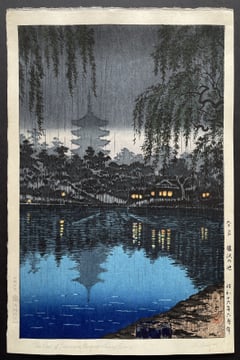
The pond at Sarusawa, Evening Rain
€1,500
-
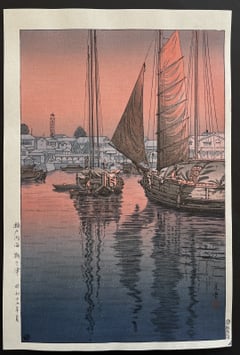
Sunset at Tomonotsu Inland Sea
€390
-
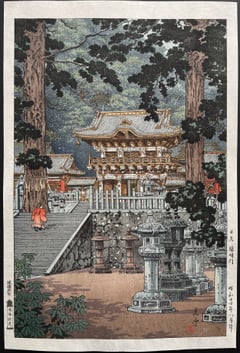
The Gate Yomei, the Nikko Shrine
€1,600
-
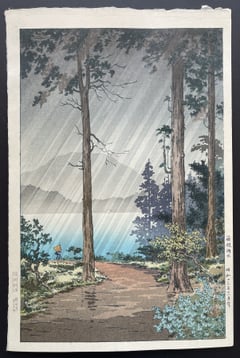
Morning Rain at Hakone (Seki)
€525
-
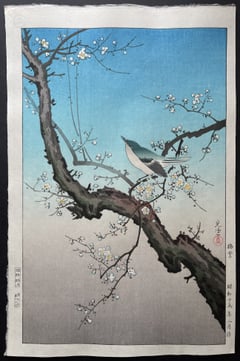
Bush Warbler (Oban) (Seki)
€370
-
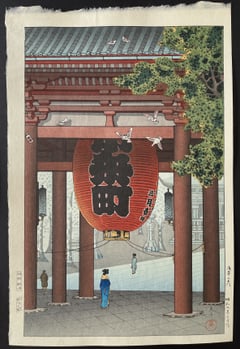
Asakusa Nioh-gate (Seki)
€475
-
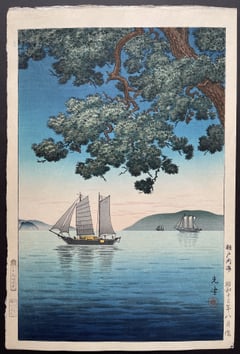
The Inland Sea of Seto in Summer
€1,500
-
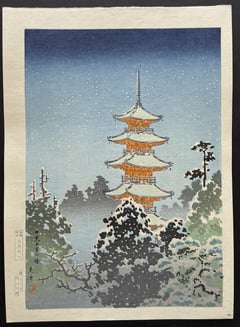
Pagoda in Nikko (Itoh)
€350
-
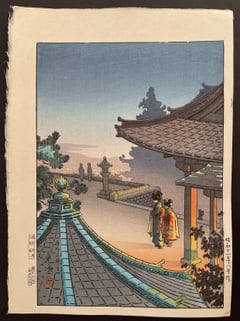
Evening at Mii-Dera Temple (Itoh)
€350
-
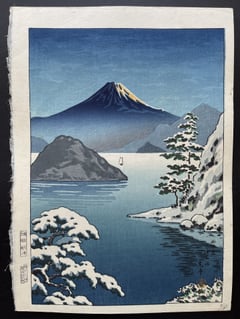
Fuji from Mitsuhama in Nishiizu (Itoh)
€350
-
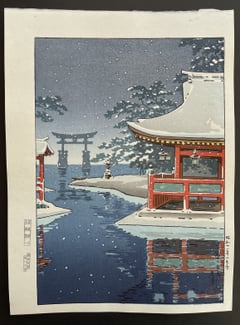
Miyajima in Snow
€220
-
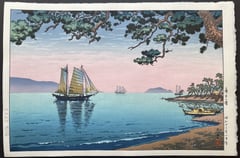
Maiko Beach (Seki)
€450
-
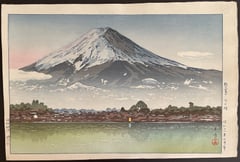
Lake Kawaguchi (Seki)
€500
-
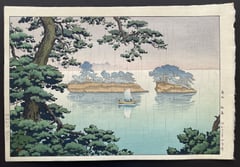
Spring Rain at Matsushima (Seki)
€450
-
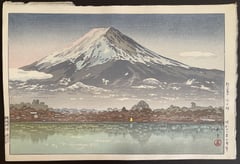
Lake Kawaguchi (Hamano)
€390
-
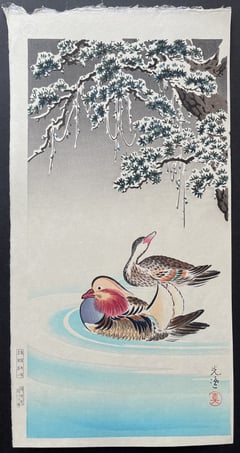
Mandarin Ducks (Seki)
€200
-
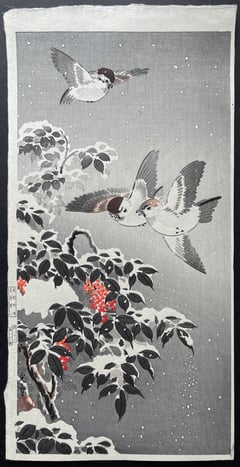
Sparrow (Mitsugiri)
€200
-
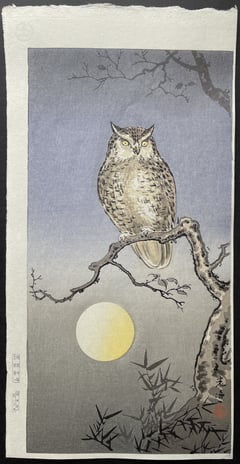
Owl (Seki)
€260
-
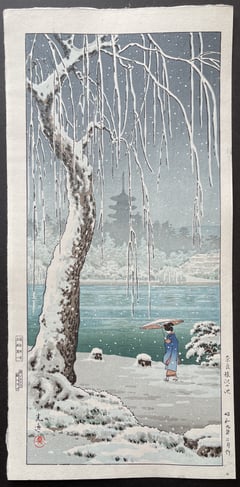
Sarusawa Pond in Nara
€350
-
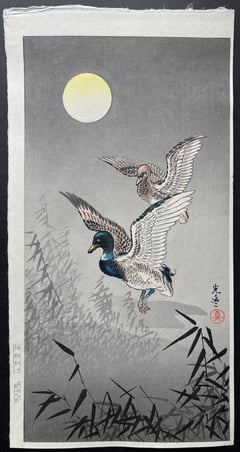
Wild Duck (Mitsugiri) (Seki)
€250
-
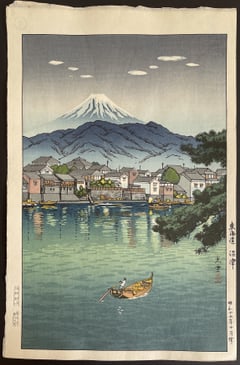
Numazu
€450
-
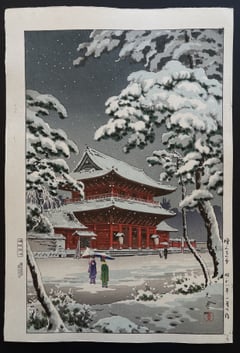
Zojoji Temple in Snow
€370
-
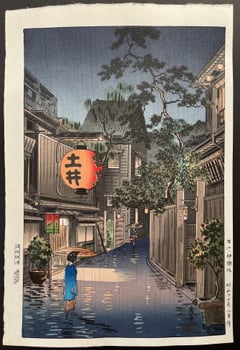
Ushigome Kagurazaka
€350
-
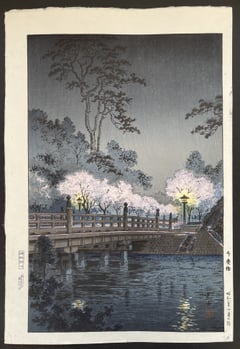
Benkei Bridge
€350
-
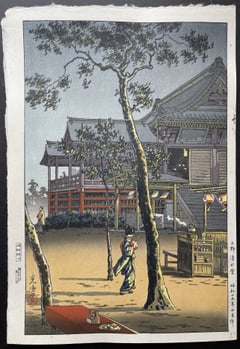
Ueno Kiyomizudo Temple
€300
-
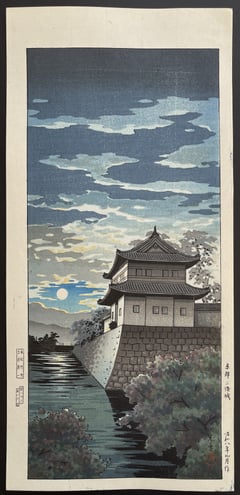
Nijo-castle at Kyoto
€320
-
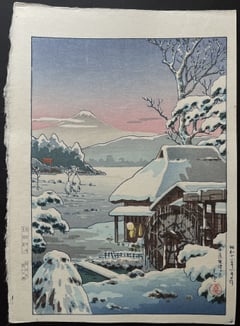
Tokaido Yaizunohara (Chuban) (Seki)
€350
-
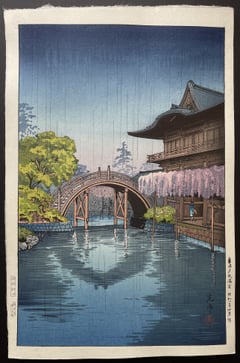
Kameido Tenmangu Shrine (Seki)
€500
-
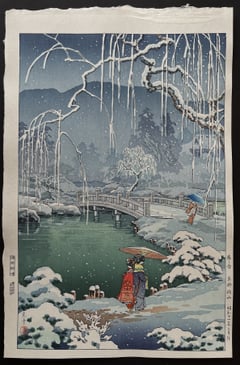
Spring Snow at Maruyama in Kyoto
€300
-
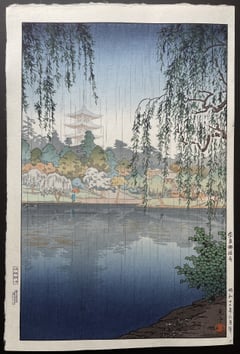
Kofukuji Temple, Nara
€350
-
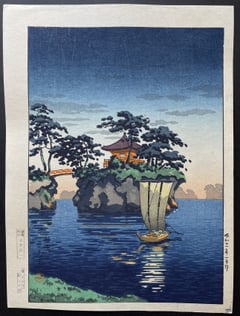
Matsushima (Itoh)
€375
-
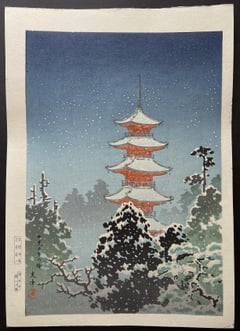
Pagoda in Nikko (Seki)
€280
-
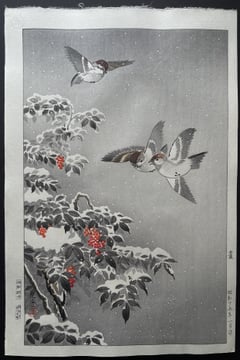
Sparrow (Seki)
€375
-
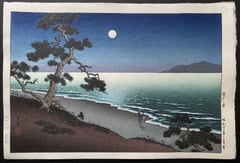
Suma Beach (Seki)
€450
-
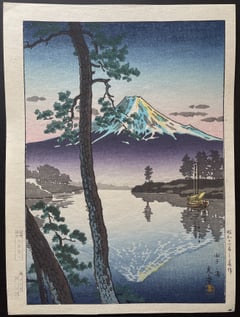
Tago Bay (Itoh)
€380
-
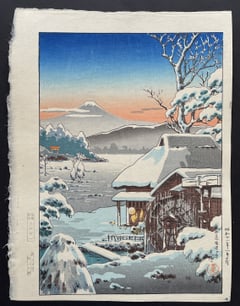
Tokaido Yaizunohara (Itoh)
€350
-
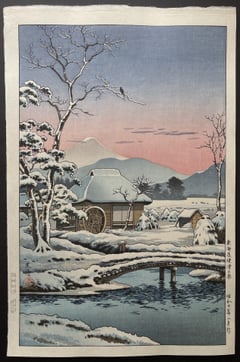
Tokaido Yaizunohara (Seki)
€450
-
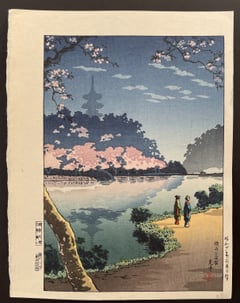
Yokohama Sankei Garden (Itoh)
€350
-
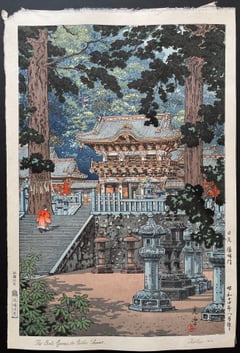
The Gate Yomei, the Nikko Shrine
€1,200
-
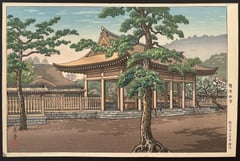
Kashihara Shrine
€350
-
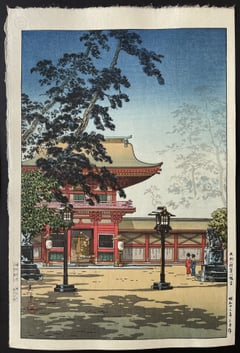
Kyushu Hakozaki Hachimangu Shrine (Seki)
€450
-
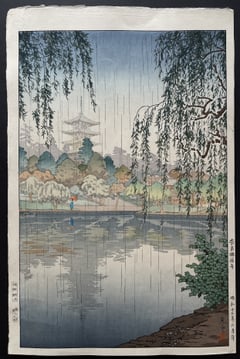
Kofukuji Temple, Nara (Seki)
€425
-
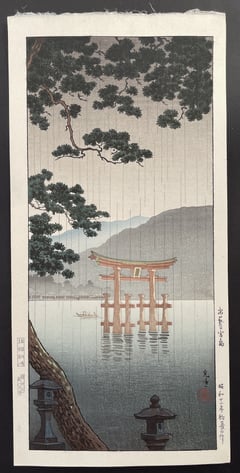
Miyajima (Seki)
€275
-
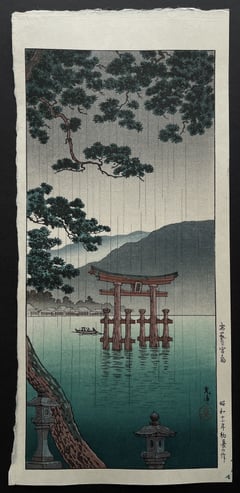
Miyajima (c. 1960s–80s)
€325
-
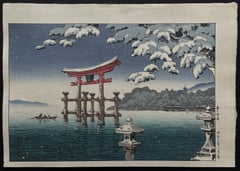
Snow at Miyajima (c. 1960s–80s)
€450
-
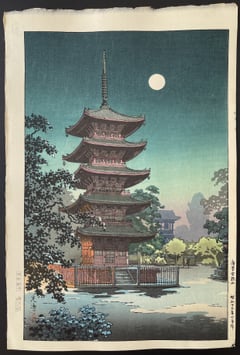
Asakusa Kinryuzan Temple (Seki)
€500
-
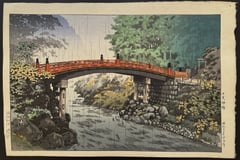
Shinkyo Bridge at Nikko (Seki)
€450
-
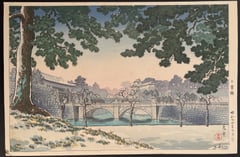
Nijubashi Bridge
€400
-
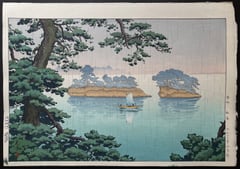
Spring Rain at Matsushima
€340
-
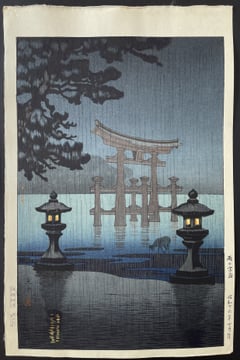
Rainy Miyajima (Seki)
€450


Previously sold (55)
-
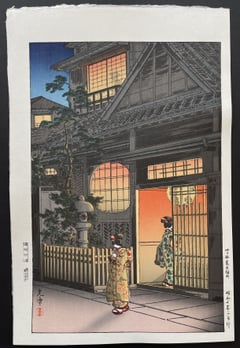
Araki Yokocho at Yotsuya
Sold
-
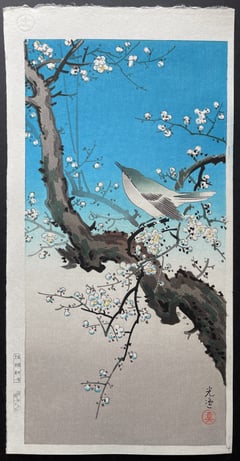
Bush Warbler (Mitsugiri) (Seki)
Sold
-
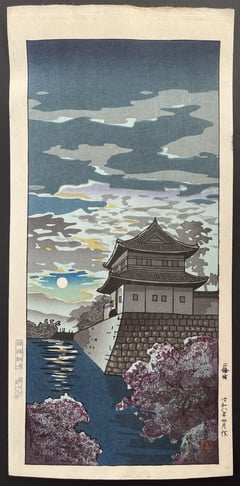
Nijo-castle at Kyoto (Seki)
Sold
-
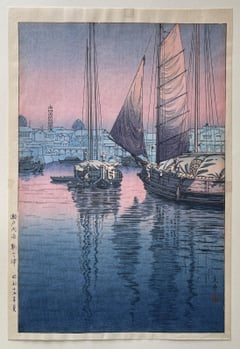
Sunset at Tomonotsu Inland Sea
Sold
-
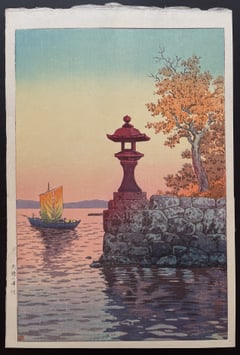
Returning Sailboat at Yabase
Sold
-
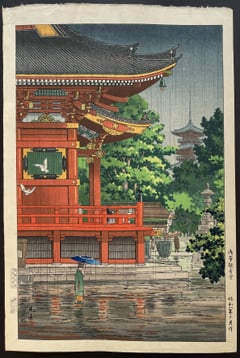
Asakusa Kannondo Temple (Yokoi)
Sold
-
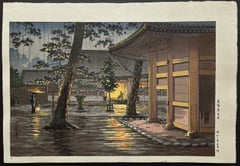
Sengakuji Temple In Rain, Takanawa (c. 1960s–80s)
Sold
-
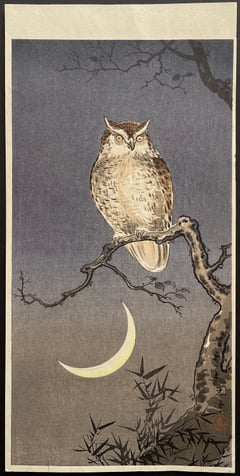
Owl (1930s)
Sold
-
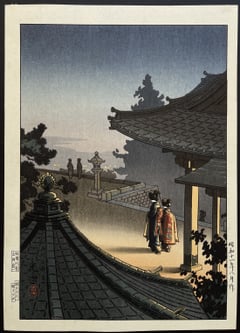
Evening at Mii-Dera Temple (First Edition)
Sold
-
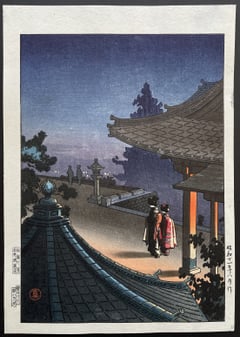
Evening at Mii-Dera Temple (Yokoi)
Sold
-
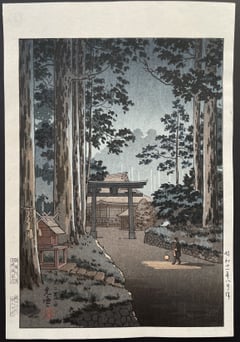
Nikko Futarasan (Yokoi)
Sold
-
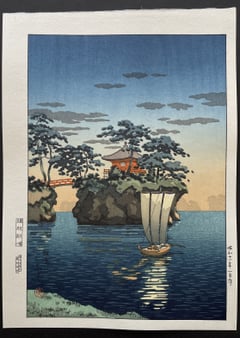
Matsushima
Sold
-
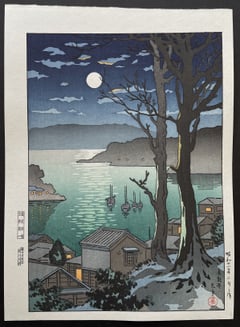
Manazuru Harbor
Sold
-
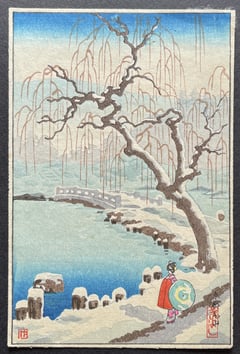
Kyoto Maruyama (Takemura)
Sold
-
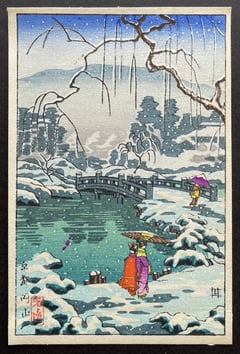
Kyoto Maruyama (Doi)
Sold
-
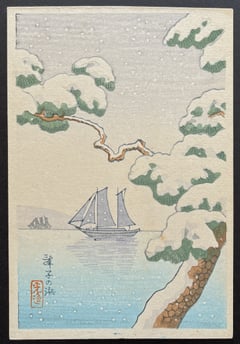
Maiko Beach (Postcard)
Sold
-
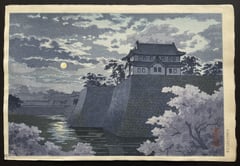
Moonlit Night at Osaka Castle (Early Edition)
Sold
-
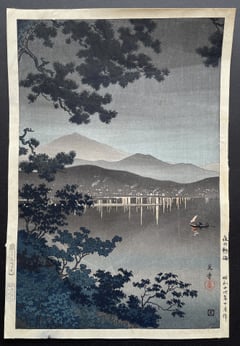
A Midnight Scene at Atami
Sold
-
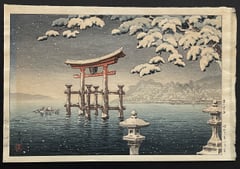
Snow at Miyajima (Yokoi)
Sold
-
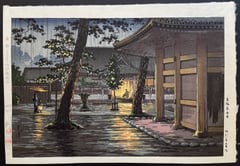
Sengakuji Temple In Rain, Takanawa (Seki)
Sold
-
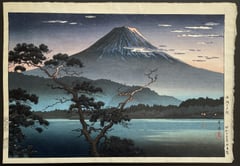
Evening Glow at Lake Sai (Yokoi)
Sold
-
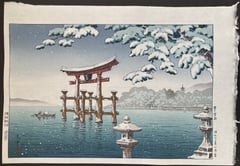
Snow at Miyajima
Sold
-
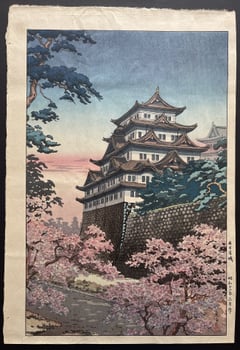
Castle in Nagoya
Sold
-
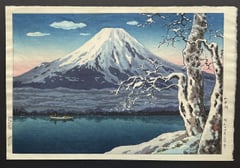
Lake Yamanaka (Yokoi)
Sold
-
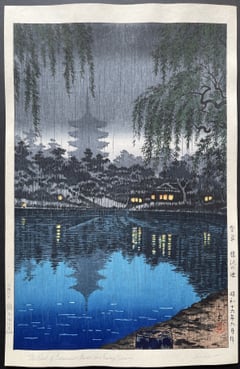
The pond at Sarusawa, Evening Rain
Sold
-
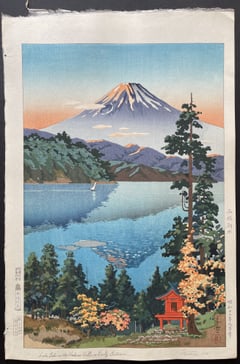
Lake Ashi in Hakone in Early Autumn
Sold
-
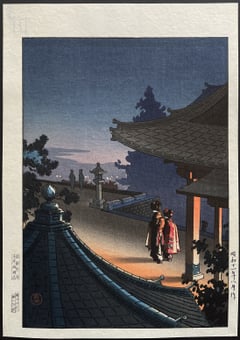
Evening at Mii-Dera Temple (Yokoi)
Sold
-
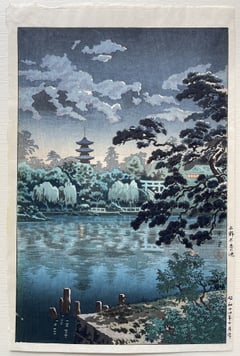
Shinobazu Pond at Ueno
Sold
-
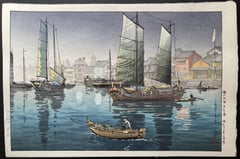
Seto Inland Sea, Akashi Bay (Seki)
Sold
-
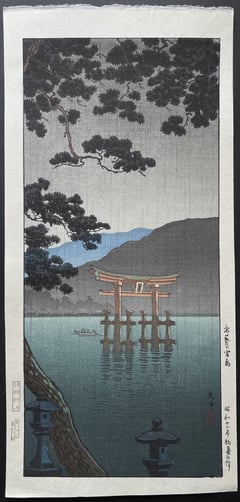
Miyajima
Sold
-
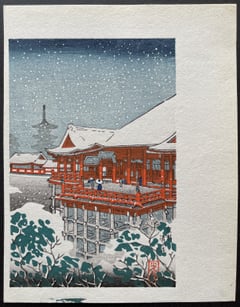
Kiyomizu Temple in Kyoto
Sold
-
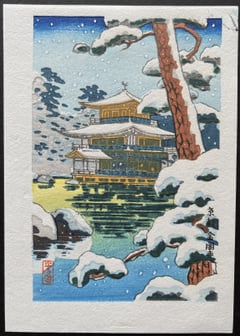
Kinkakuji or Golden Pavilion in Kyoto
Sold
-
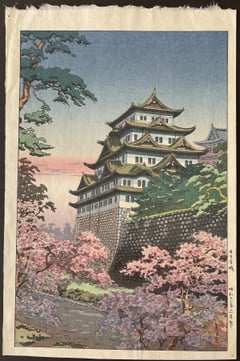
Castle in Nagoya
Sold
-
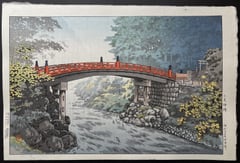
Shinkyo Bridge at Nikko
Sold
-
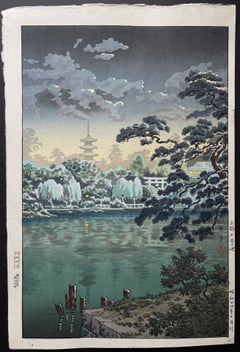
Shinobazu Pond at Ueno
Sold
-
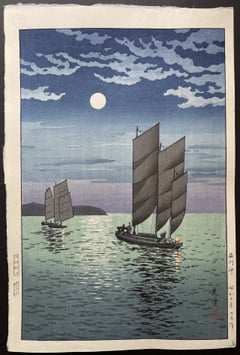
Shinagawa Coast
Sold
-
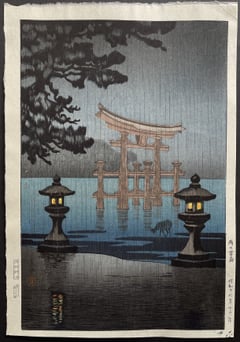
Rainy Miyajima
Sold
-
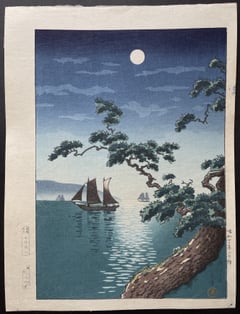
Maiko Sea Shore (Itoh)
Sold
-
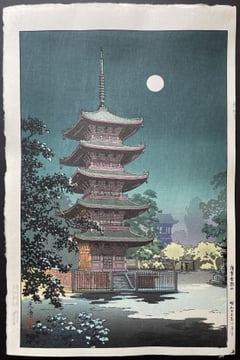
Asakusa Kinryuzan Temple
Sold
-
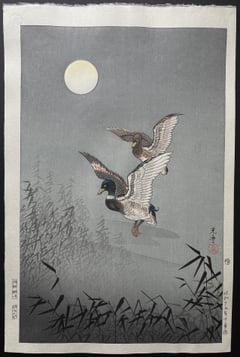
Wild Duck (Seki)
Sold
-
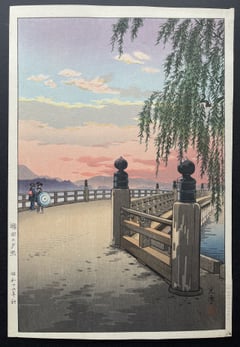
Evening Glow at Seta
Sold
-
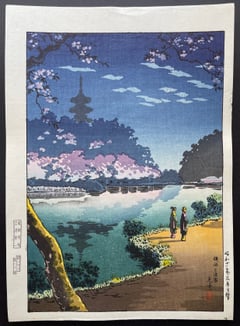
Yokohama Sankei Garden
Sold
-
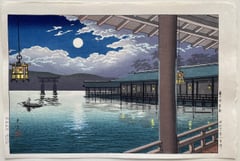
Summer Moon at Miyajima (Seki)
Sold
-
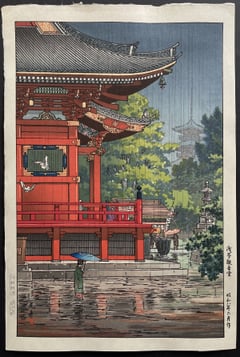
Asakusa Kannondo Temple (Seki)
Sold
-
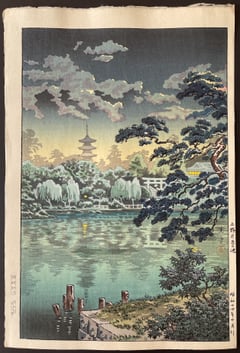
Shinobazu Pond at Ueno (Seki)
Sold
-
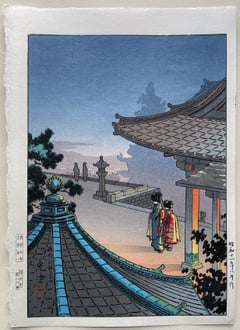
Evening at Mii-Dera Temple (Seki)
Sold
-
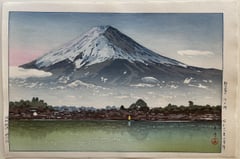
Morning Fuji from Lake Kawaguchi (Seki)
Sold
-
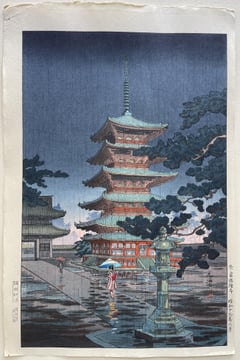
Horyuji Temple, Nara (Seki)
Sold
-
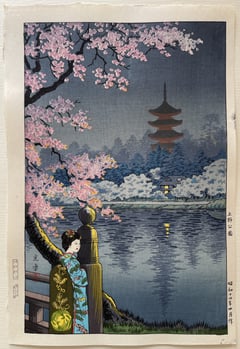
Ueno Park
Sold
-
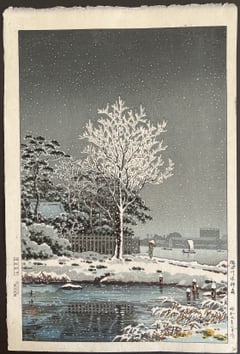
Snow on Sumida River
Sold
-
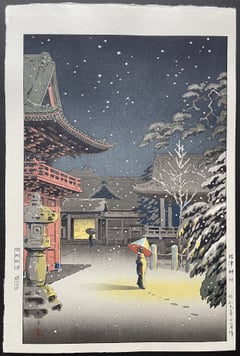
Snow at Nezu Shrine
Sold
-
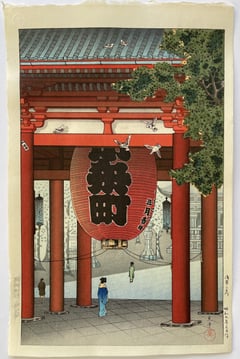
The Great Lantern at Asakusa Temple (Seki)
Sold
-
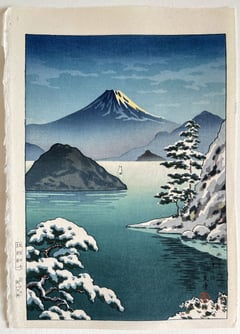
Fuji from Mitsuhama in Nishiizu (Seki)
Sold
-
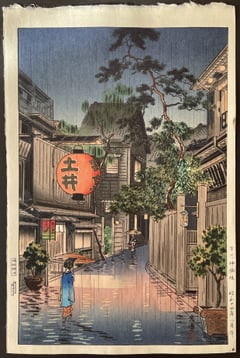
Ushigome Kagurazaka
Sold
-
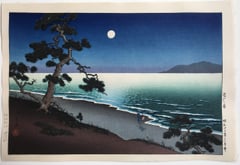
Suma Beach
Sold


