
Artists
Browse the artists with prints currently available below. Further down, an alphabetical index lists every artist whose work we have available now or have sold in the past.
-
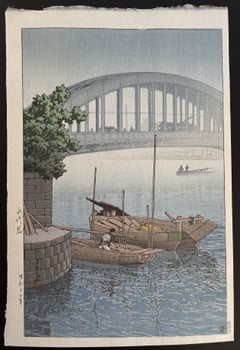
Kawase Hasui
1883–1957 · 33 printsKawase Hasui (1883-1957) has become one of the most popular woodblock print artists of our time. Already recognized as a world-class artist during his lifetime, his designs have aged well and have, without exception, continued to capture successive generations.
-
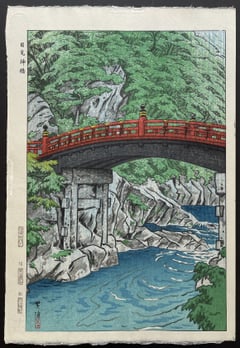
Kasamatsu Shiro
笠松 紫浪
1898–1991 · 38 printsKasamatsu Shiro (1898-1991) was a prolific and celebrated woodblock artist. At only thirteen he started as an apprentice. He could trace part of his artistic lineage back through Kaburagi and Yoshitoshi, connecting him to the great Ukiyo-e masters of the 19th century.
-
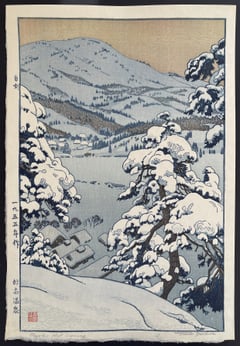
Toshi Yoshida
吉田 遠志
1911–1995 · 71 printsToshi Yoshida (1911–1995) was one of the most successful Japanese woodblock artists of the 20th century. A member of the Yoshida family, he was the father of Tsukasa Yoshida and son of Fujio and Hiroshi Yoshida. He started drawing as a child and was able to learn painting and woodblock printmaking from his parents. His early works already demonstrated considerable ability and he was producing accomplished woodblock prints from a young age.
-
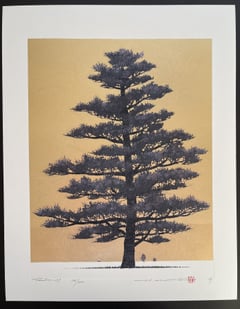
Hajime Namiki
b. 1947 · 60 printsHajime Namiki (b. 1947) is a modern Japanese woodblock artist. Originally trained as a sculptor, he transitioned to woodblock printing in the late 1970s. He limits himself to a small number of themes, and within those he experiments and varies a tremendous amount. Among these themes are tree scenes (varying from dogwood to pine trees), dragons and cherry blossoms.
-
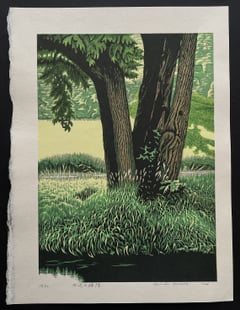
Koichi Maeda
b. 1936 · 23 printsKoichi Maeda (b. 1936) is a Japanese woodblock print artist with extensive experience. Already in 1961, at the age of 25, his works were exhibited through the Japan Print Association. His early works, now rarely found, are reminiscent of impressionistic art, but his later works became more naturalistic. His work remains deeply atmospheric and echoes the woodblock prints of Kawase Hasui, with his landscape prints often searching for a serenity and timelessness.
-
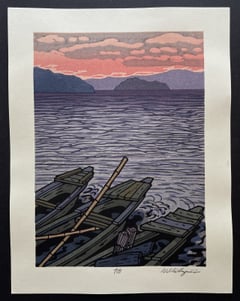
Nishijima Katsuyuki
b. 1945 · 107 printsNishijima Katsuyuki (b. 1945) is a prolific and popular Japanese woodblock print artist. He has been perfecting his art for half a century, working in the Sosaku-hanga style, and thus carving and printing entirely by himself.
-
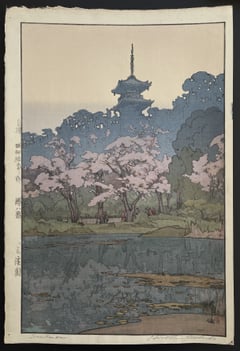
Hiroshi Yoshida
吉田 博
1876–1950 · 2 printsHiroshi Yoshida (1876–1950) was one of the leading figures of Japanese printmaking in the 20th century. Together with Kawase Hasui, he is the most famous artist of the Japanese Shin-hanga movement that revived Japanese woodblock printing to new heights. A prolific artist, Hiroshi Yoshida traveled the world and produced landscape prints of many different countries.
-
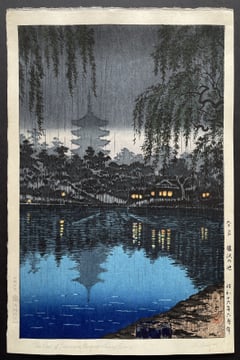
Tsuchiya Koitsu
土屋光逸
1870–1949 · 46 printsTsuchiya Koitsu (1870–1949) was a Japanese woodblock print artist. He is known for his high-quality Shin-hanga prints, excelling in the depiction of light and shadow and the expression of mood.
-
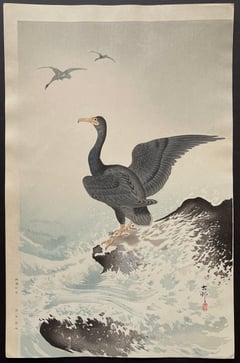
Ohara Koson
1877–1945 · 13 prints -
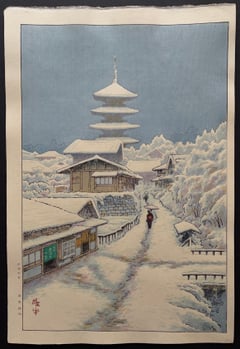
Ito Yuhan
1882–1951 · 8 printsIto Yuhan (1882-1951) was a Shin hanga artist who designed a series of woodblock prints in the 1930s for publisher Nishinomiya Yosaku. These prints are in unmistakable Shin-hanga style and depict landscapes and famous Japanese places. That notwithstanding, within the Shin-hanga movement the woodblock prints of Ito Yuhan stand out due to their unique style. This is best exemplified in his prints where the key-block was omitted during printing, even though it was used during the creation process of the woodblocks. As a result, the sharp black outlines that are present in other Shin hanga designs are missing, and combined with printing in soft tones and with many color gradients, the resulting prints look almost like watercolor paintings.
-
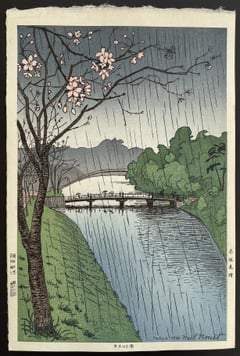
Noel Nouet
1885–1969 · 15 prints -
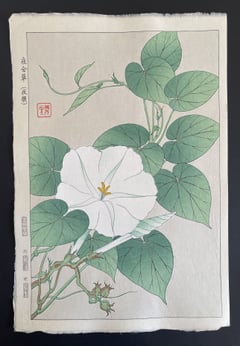
Kawarazaki Shodo
1889–1973 · 22 printsKawarazaki Shodo (1889-1973) was a painter and woodblock artist. He designed many flower prints for publisher Unsodo that are still popular today.
-
Hiroshige
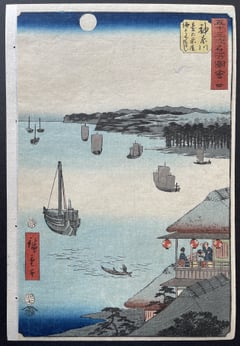
1797–1858 · 7 printsUtagawa Hiroshige (1797–1858) was one of the most famous Japanese woodblock print artists, considered the last great ukiyo-e master. He has had a lasting impact on both Japanese print artists and on Western painters such as Van Gogh and Monet, and his prints are still widely admired to this day.
-
Gekko Ogata
尾形月耕
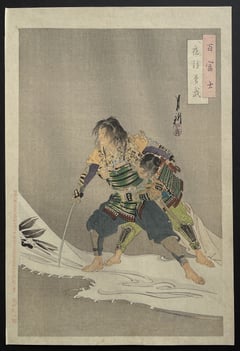
1859–1920 · 5 printsGekko Ogata (1859 – 1920) was a self-taught Japanese painter and woodblock artist. He was a prolific artist with a strong work ethic and produced many paintings, woodblock prints, and illustrations for various media. In later years, attention to his works was less than for artists such as Tsukioka Yoshitoshi or Yoshu Chikanobu, but in recent years there has been renewed interest. For an in-depth overview of his life and work, there is an excellent resource in Amy Reigle Newland's "Printed and Painted: The Meiji Art of Ogata Gekko (1859-1920)".
-
Takahashi Shotei
高橋松亭
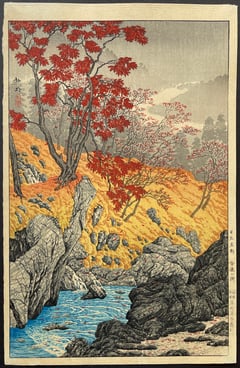
1871–1945 · 8 prints -
Eijiro Kobayashi
小林英二郎
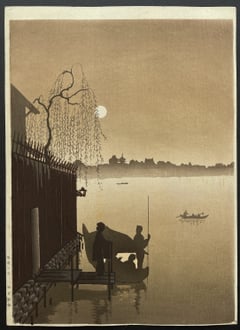
1870–1946 · 1 printEijiro Kobayashi (1870-1946) was a Japanese woodblock print artist who was active in the first half of the 20th century. Little is known about his life, but his art is well known due to the great success of a series of night scene prints.
-
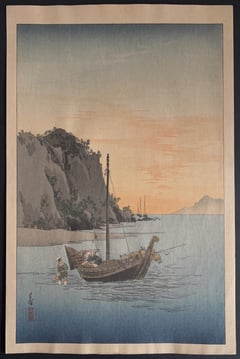
Gesso Yoshimoto
1881–1936 · 10 prints -
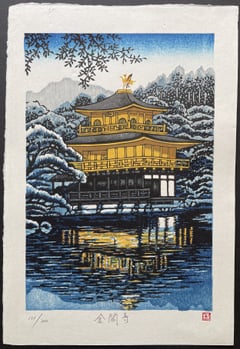
Fu Takenaka
1945–2022 · 7 printsFu Takenaka (1945 – 2022) was a successful woodblock print artist. She had a background in design, fashion and fabric, and transitioned to woodblock printing later in life. Her favorite themes were temples in and around Kyoto and owls. She depicted these in a dreamlike style, very distinct from other Japanese woodblock print artists.
-
Tsukasa Yoshida
b. 1949 · 8 printsTsukasa Yoshida (b. 1949) is a contemporary Japanese woodblock print artist. He hails from the famous Yoshida art family and is the son of Toshi Yoshida and grandson of Hiroshi Yoshida.
-
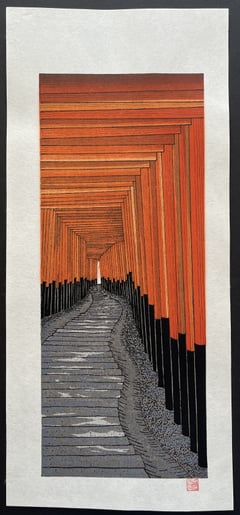
Teruhide Kato
加藤晃秀
1936–2015 · 27 printsAfter being educated at Kyoto Art College, Teruhide Kato (1936–2015) started his artistic career as a Kyoto-based kimono designer, became a successful painter and in the last decades of his life also a woodblock print artist. Such career transitions are more common than they might seem. Kimono design has long shared patterns, themes and visual expression in general with Japanese painting and woodblock printing. In practice, there are often close business relationships between people working in these arts in Kyoto. Most famously perhaps, the woodblock print publisher Unsodo started out as a publisher of kimono pattern books. Not surprisingly, it was Unsodo that recognized Teruhide Kato as a potential source of woodblock print designs and started to collaborate with him to produce them.
-
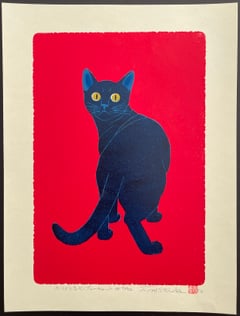
Nishida Tadashige
b. 1942 · 22 printsNishida Tadashige (b. 1942) is a Japanese woodblock print artist best known for his cat prints. Though subjective, the cat prints are often considered remarkable in the way they succeed in conveying the different moods and characters of the cats shown.
-
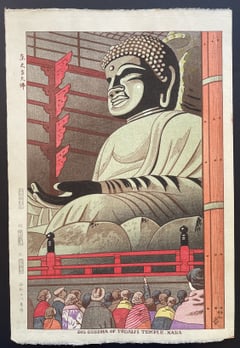
Takeji Asano
1900–1999 · 11 printsTakeji Asano (1900–1999) combines several of the typical activities of 20th-century woodblock artists. He was trained at art schools in Kyoto and started out with oil painting. He then transitioned to woodblock printing within the Sosaku-hanga movement. As such, he created prints from start to finish, drawing, carving and printing them himself. In the 1950s he switched to the process used by the Shin-hanga (new prints) movement which adhered to the division of labor used by traditional Ukiyo-e artists. For these prints he only drew and cooperated with a carver, printer and publisher to achieve the final result. Later on he turned to a more individualistic and novel style and kept creating until the very last years of his long life.
-
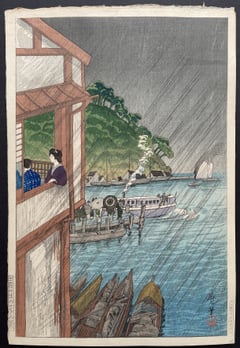
Oda Kazuma
1882–1956 · 1 printOda Kazuma (1882–1956) was a Japanese print artist and researcher, active from the end of the 19th century. He started with lithographs, but also learned painting and woodblock printing. He became a prominent member of the Sosaku-hanga movement.
-
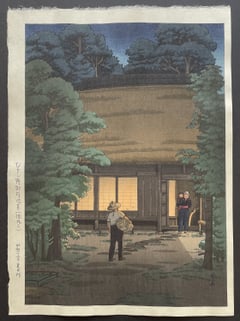
Ishiwata Koitsu
1897–1987 · 3 prints -
Yamamura Koka
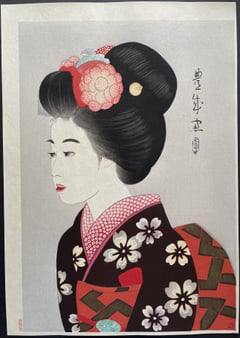
1885–1942 · 2 printsYamamura Koka (1885–1942) started as a painter but was noticed by woodblock print publisher Watanabe Shozaburo, who then published a number of woodblock prints of Yamamura Koka's designs. Subsequently, further prints were published by a society established for this purpose by a group of supporters, or self-published with the society's support. Yamamura Koka excelled at portraits, and his prints in this genre are among the best of the Shin-hanga movement.
-
Gyosui Suzuki
1 print -
Rakusan Tsuchiya
1896–1976 · 1 print -
Eiichi Kotozuka
琴塚 英一
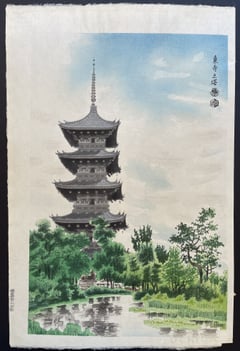
1906–1981 · 3 printsEiichi Kotozuka (1906 - 1981) was a Japanese woodblock print artist, working in the Sosaku-hanga style. He depicted traditional woodblock print themes, such as flowers and landscapes, but also made prints depicting Japanese cultural traditions.
-
Katsushika Hokusai
葛飾 北斎
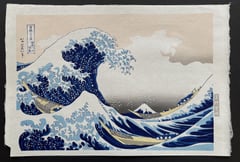
1760–1849 · 1 printKatsushika Hokusai (1760–1849) was one of the most famous Japanese woodblock artists. He became an artist at a young age, lived a long life, and kept working continuously, leading to a wide body of work of such high quality that he is considered among the greatest artists ever.
-
Ide Gakusui
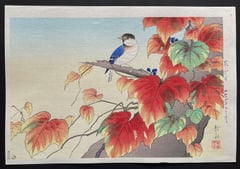
1899–1978 · 2 prints -
Arai Yoshimune
新井芳宗
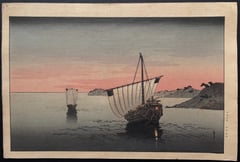
1863–1941 · 6 printsArai Yoshimune (1863–1941) was a son of ukiyo-e artist Utagawa Yoshimune I, and studied under Tsukioka Yoshitoshi. He worked with publisher Hasegawa/Nishinomiya on woodblock print illustrations of Japanese fairy tale books, and later also on Shin-hanga designs by the same publisher.
-
Elizabeth Eaton Burton
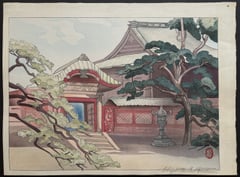
1869–1937 · 1 printElizabeth Eaton Burton (1869–1937) was a versatile artist associated with the Arts and Crafts movement.
-
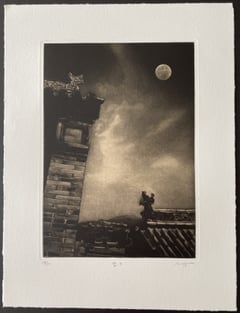
Man Zhuang
b. 1972 · 3 prints -
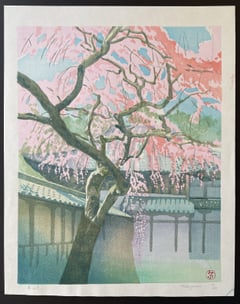
Junichi Mibugawa
b. 1973 · 11 printsJunichi Mibugawa (b. 1973) is a modern Japanese woodblock print artist, working in a very distinct and novel style. It seems that the woodblocks are not carved to microscopic detail, but that by using superb printing technique he is able to create very lively imagery. Remotely analogous to pointillistic art, it seems that the prints of Junichi Mibugawa leave it to the mind of the viewer to automatically combine the various easily discernible parts—viewed up close—into vivid imagery.
-
Joichi Hoshi
1913–1979 · 1 print -
Kobayashi Kiyochika
小林 清親
1847–1915 · 4 prints -
Koizumi Kishio
小泉癸巳男
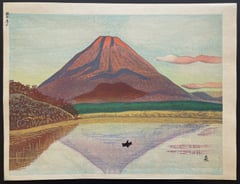
1893–1945 · 11 printsKoizumi Kishio (1893–1945) is renowned as the creator of the print series One Hundred Pictures of Great Tokyo in the Showa Era. Created between 1928 and 1940, the series chronicles Tokyo in the years leading up to the war, and its prints remain widely sought after. As a member of the Sosaku-hanga movement, Koizumi carved and printed his woodblocks himself, working in a distinctive style that has retained its artistic appeal.
-
Ono Shigeyuki
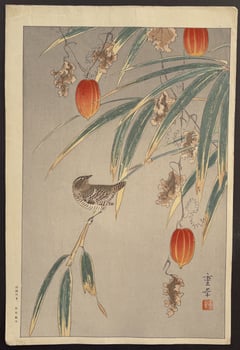
2 printsOno Shigeyuki (fl. 1930s) was a Japanese woodblock print artist about whose life very little is known.
-
Koho Shoda
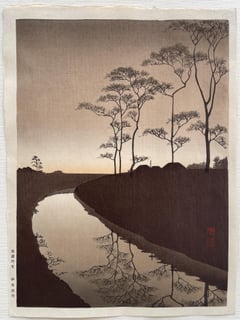
1871–1946 · 16 printsKoho Shoda (1871–1946) was a Japanese woodblock print artist. His prints exemplified the spirit of the Shin-hanga movement.
-
Shoichi Kitamura
b. 1980 · 1 print -
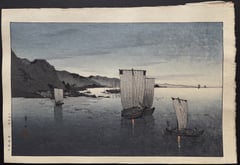
Suzuki Kason
1860–1919 · 1 printSuzuki Kason (1860–1919) was an accomplished Japanese painter who designed a limited number of woodblock prints.
-
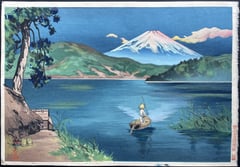
Yoshimoto Masao
1897–1974 · 2 prints -
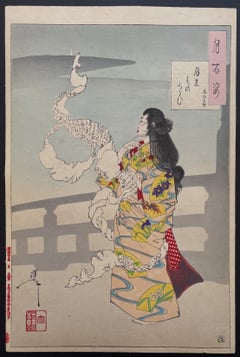
Yoshitoshi Tsukioka
月岡芳年
1839–1892 · 3 printsYoshitoshi Tsukioka (1839–1892) was a Japanese woodblock print artist. He worked in a time when modern techniques like photography were diminishing the importance of woodblock prints as a medium, but kept innovating and helped to keep woodblock printing alive. His best-known series are One Hundred Aspects of the Moon and New Forms of Thirty-Six Ghosts.
-
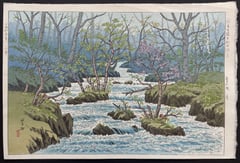
Ito Takashi
1894–1982 · 2 prints -
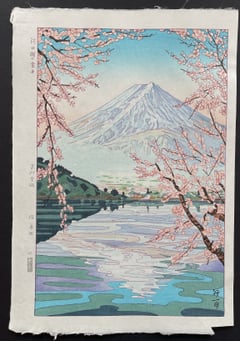
Koichi Okada
b. 1907 · 1 printOkada Koichi (b. 1905) is known for his series of Shin-hanga woodblock prints Twelve Views of Japan, created circa 1950. The series might have been intended to consist of twelve different prints, but only six are known. They depict Mount Fuji seen from Hakone, Lake Kawaguchi, Lake Ashinoko, Hagoromo, and overlooking Nihondaira. The prints were published by Unsodo, which has continued to issue editions to the present day.
-
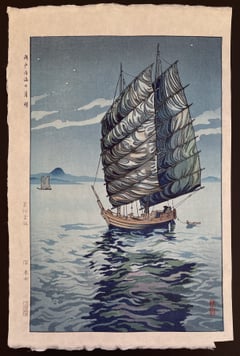
Shintaro Okazaki
1 print -

Yokouchi Kiyoharu (Ginnosuke)
1870–1942 · 3 printsYokouchi Kiyoharu (1870–1942), also known as Yokouchi Ginnosuke, is one of those Japanese woodblock print artists whose art's high quality contrasts sharply with the scant amount of information about the artist himself. Only a few details are known about his life, and unfortunately there is some factually incorrect information online. Three important facts are known, but not much more:


